
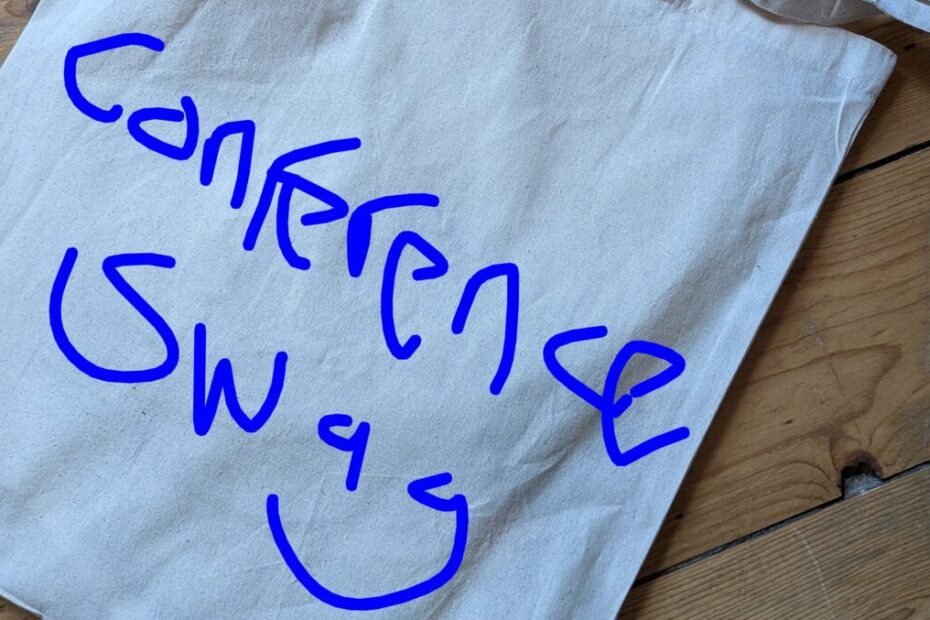
Using your event budget in ways that really make a difference
How many branded tote bags do you have languishing in a cupboard ?? I bet it’s into double digits and that’s not counting the ones you have already donated, chucked out or refused in the first place. Many event organisers, expecially inexperienced ones, seem to think their event isn’t complete until they have gifted their guests some kind of swag – tote bags, pens, highlighters, post-it notes. And let’s be honest – a lot of this stuff is totally unnecessary and ultimately destined for landfill.
The event take-away should be the experience, not the merch
Generosity is a wonderful thing and I often talk about why good old-fashioned hospitality is absolutely key to events. So this is not a dig at event organisers – I know they are trying their best and just copying what they’ve seen others doing.
But I also do a lot of clearing up after events and so I get to see what is discarded – the things that people really don’t need or care enough about to take home. And if your event budget is tight then things which are immediately thrown away are just a waste of resources.
Three things I would cut to make your budget work harder
- Branded merch, lanyards and professional printing: None of these things are massively expensive in and of themselves, but they are just unnecessary and often go straight to landfill afterwards. Make the event information available digitally and people will print it if they want to. Name badges (or just stickers and a Sharpie) are more effective than lanyards as they put people’s names at eye-level and are easy enough to DIY with an old-school mail-merge.
- Over-catering: I’ve rarely attended an event where there wasn’t a mountain of food left over at the end. I really don’t know how much caterers think people eat! Save your budget by slightly under rather than over-catering. And reduce waste by ordering things like wrapped biscuits that people can grab for the journey home.
- Fancy event websites or apps: Unless you are running an absolutely massive event then you don’t need to pay loads of money for a bespoke website or app. I am however a massive fan of using tools like Padlet to create mini-event websites which put all the essential info in one place. Here is an example microsite to get you started.
How I would reallocate that budget
- More time and space: Book a slightly bigger venue so you can have a quiet room or space for networking or a more social cabaret-style layout. And book the room for an extra hours or two so you have time for longer breaks or speaker briefing or AV testing (and resist the urge to fill that extra time with more content!).
- Better inclusion: This is a massive topic and what you do will depend on who you feel might be excluded and what inclusion might look and feel like. But it might be paying for an interpreter, providing taxis or childcare, or booking a pricier venue that is more accessible for your target audience. That’s the kind of hospitality that people feel deep in their bones.
- Event design/facilitation support: I mean, it’s kind of inevitable I would say this, but imagine the peace of mind that could come from knowing you had talked your event plan through with a specialist. Or handing over hosting to someone else and making it their responsibility to keep the speakers to time, or run the networking so that you can just relax and participate. Well, that’s exactly what I do! From just £600 (about the same as lunch for 30 people) you could have my dedicated support to take the stress out of running your next event. Get in touch and let me know what you are struggling with.
