
Preparing the audience so they know what to expect is just as important as preparing your speakers
Have you ever been surprised by something that happened at an event? In a good way or a bad way? A couple of weeks ago I had a little jaunt to TEDx Durham and experienced both.
I’m guessing you’ve watched at least one TED talk before so you know how they go – short, well-rehearsed, inspirational talks on life lessons or big ideas. I’ve watched a lot of video talks so I was excited to attend an actual event. I could see the range of speakers was eclectic, so I expected the unexpected…up to a point.
There are good surprises, and not-so-good suprises
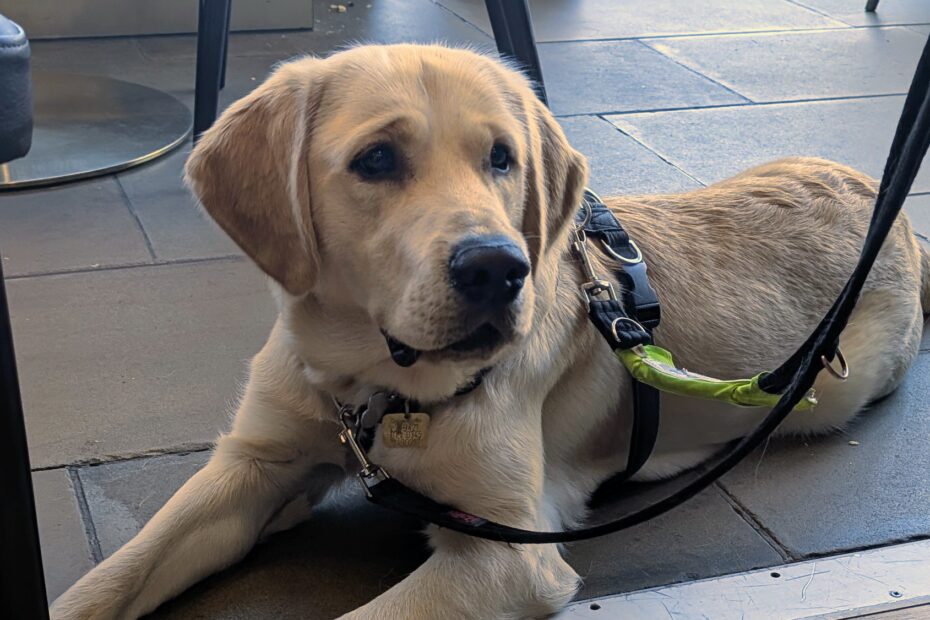
There were good surprises. The venue was upmarket, and the staging was on-brand. It all felt very professional despite being volunteer run. And they had trainee guide dogs, like the gorgeous pup above, for petting in the foyer (such a genius fundraising move!).
There were not-so-good surprises. The timing was all over the place, mic problems abounded, and then there was the most extreme handbrake turn I’ve ever experienced at an event. Sue Black had just shared her story of escaping an abusive husband with 3 young kids in tow and making it through university as a single mum. Then a live ukulele band bounced onto the stage, all hair (so much hair!) and spangly gold outfits, and proceeded to play a 90s rave medley. ✨👯 😱 As my friend Jenny said ‘was that some kind of collective hallucination?’
I love a bit of creative scheduling, and I go to loads of music festivals so that wasn’t why I felt unsettled – it was the abruptness and unexpectedness of the pivot. It reminded me that you have to take your audience on a journey and it has to be a journey which they have agreed (explicitly or implicitly) to go on with you.
Knowing what to expect = psychological safety
I have talked a lot to people recently about why we need to get better at preparing our audiences. It is just as important as preparing your speakers. How often have you turned up an event barely knowing the address or agenda let alone what would be expected of you?
I believe that for people to show up as their best selves we need to make them feel safe. And we feel safe when we know what is happening and trust the organisers to take care of us. And making people feel safe doesn’t mean playing it safe – if we feel safe we actually welcome more unusual experiences.
Pre-event communication is key
Here are some tips for better preparing your participants for your next gathering
- Be upfront about the content of the event and what will be expected of the audience. Are they going to be passive recipients or are you looking for active engagement?
- Drip-feed information – don’t wait until the day before to send one epic email covering everything. It’s better to send regular emails in the run up to the event, maybe accommodation details one week, travel information the next, and use these emails to tease the event content to give people a reason to show up.
- Help people to find out who else is attending so they can make the most of that opportunity to connect, especially in person.
- Sequence the event mindfully to take your participants on a journey. That ukulele band might have made a brilliant closing act, but it was jarring in the middle of the day. Think about the flow of the event and how to manage audience energy.
I can promise there won’t be any surprise ukuleles at my next event. I can’t promise there won’t be dogs…(unless you tell me you’re allergic of course!)
